Worn teeth in Barcelona: how to restore them.
Some patients come to the clinic and say exactly the same thing: "my teeth have been getting smaller." They don't know when it started — it was gradual. But one day they looked at a photo from ten years ago and saw the difference. Their teeth were longer, more defined, and had a shape they no longer have. And they want to get it back.
What they are describing is worn teeth, or severe dental wear. And there are options to treat it.
Dental wear is a process that can occur gradually over years, often without the patient noticing until the change is significant. When the diagnosis is correct and the protocol is appropriate, it is possible to reconstruct an anatomy very close to what the tooth had before the wear progressed.
This article explains what causes dental wear, how it manifests, when restoration is indicated, and what options are available. It is for informational purposes only. The indication for any restorative treatment must be determined by a specialized dentist after an individualized examination of the case.
Why teeth wear down
Dental wear has different causes that the dentist needs to identify before planning any restoration. Restoring without understanding the cause of the wear is the most common mistake — because the process that generated the problem can also deteriorate the restoration.
The most frequent causes are:
Bruxism — the habit of clenching or grinding teeth, often during sleep and without being aware of it. It generates forces on the teeth that can far exceed those of normal chewing, producing progressive wear of the incisal edges and occlusal surfaces. When bruxism is the cause, it is part of our bruxism and dental wear service.
Acid erosion — caused by gastroesophageal reflux, frequent consumption of acidic drinks, or certain dietary patterns. Acid weakens the enamel and makes it more vulnerable to mechanical wear. The combination of erosion and bruxism accelerates deterioration very significantly.
Friction wear — when the occlusion is not balanced and certain areas receive more load than they should. Over time, that overload generates localized wear at the most intense contact points.
Abrasion — due to excessively aggressive brushing, the use of highly abrasive toothpastes, or parafunctional habits such as biting objects.
How wear affects function and anatomy
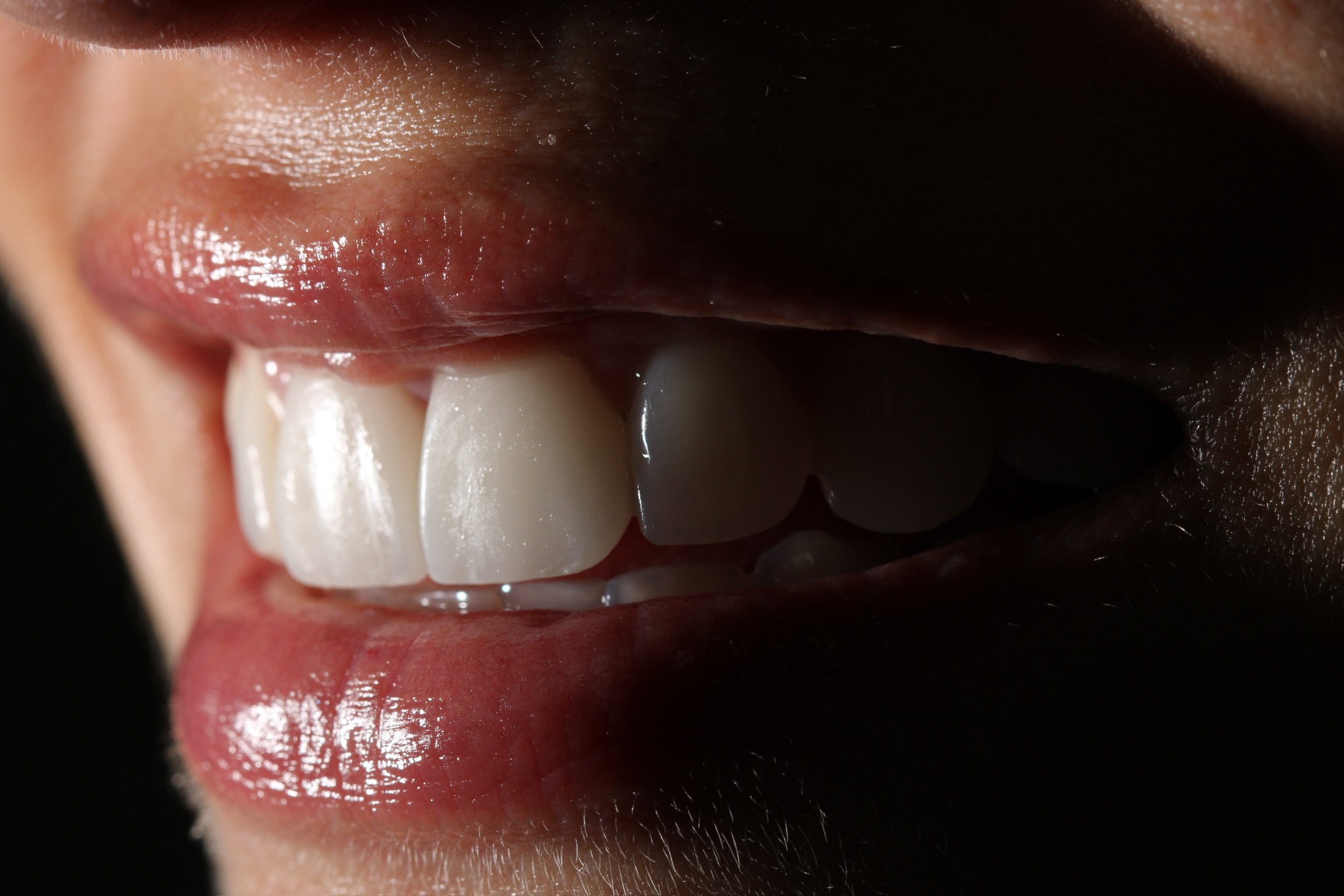
When wear progresses without treatment, the consequences go beyond the visual aspect. Teeth become shorter and incisal edges flatter — which modifies how the smile looks and, in advanced cases, how the lower third of the face is perceived.
Chewing function can be compromised. Grinding certain foods becomes more difficult or uncomfortable. And when wear affects the canine guidance — the mechanism that protects the posterior teeth during lateral jaw movements — the molars and premolars begin to receive forces for which they are not designed, which can lead to fractures or overload of the temporomandibular joint.
Dental sensitivity can also increase as enamel thins and dentin becomes more exposed. In cases of advanced wear, the loss of vertical dimension—the height of the lower third of the face—can affect both function and overall appearance.
When is restoration for tooth wear indicated?
Not all wear requires immediate restoration. In some cases, the priority is to identify and control the cause—stabilizing bruxism, treating reflux, or balancing the occlusion—before planning any intervention on the teeth.
Once the cause is controlled and the wear has resulted in a significant loss of tooth structure, restoration is indicated to restore the tooth's shape, function, and biomechanical integrity. Signs that a case warrants a specialized evaluation include: teeth that are visibly shorter than before, flat or translucent incisal edges, increased sensitivity, recurrent small fractures, or the perception that your bite has changed.
The final recommendation is always determined by a specialized dentist following a comprehensive diagnosis that includes an occlusal analysis, periodontal evaluation, and photographic and digital documentation of the case.
Rehabilitating tooth wear: restorative options
Table tops
Table tops are indirect ceramic restorations placed on the occlusal surfaces of posterior teeth—molars and premolars—to replace volume lost to wear. Their name describes their function perfectly: they create a flat, stable surface that allows the bite to function correctly.
When wear has reduced the height of the posterior teeth, table tops allow for the recovery of the vertical dimension—the height of the lower third of the face—and the balanced redistribution of chewing forces. They are the cornerstone of oral rehabilitation for severe wear because they establish the occlusal foundation upon which the rest of the treatment is planned.
Table tops can be made of ceramic—lithium disilicate or zirconia—or reinforced resin. Ceramic offers superior optical stability and documented long-term durability. Reinforced resin is a valid option for both provisional phases and as a definitive solution in specific cases—especially when there is active bruxism, when greater material elasticity is desired, or when the diagnosis indicates it is the most appropriate solution for that specific case. The choice of material always depends on an individualized diagnosis: occlusal load, the condition of the remaining enamel, and the clinical characteristics of each patient influence the decision.
Dental veneers for the anterior region
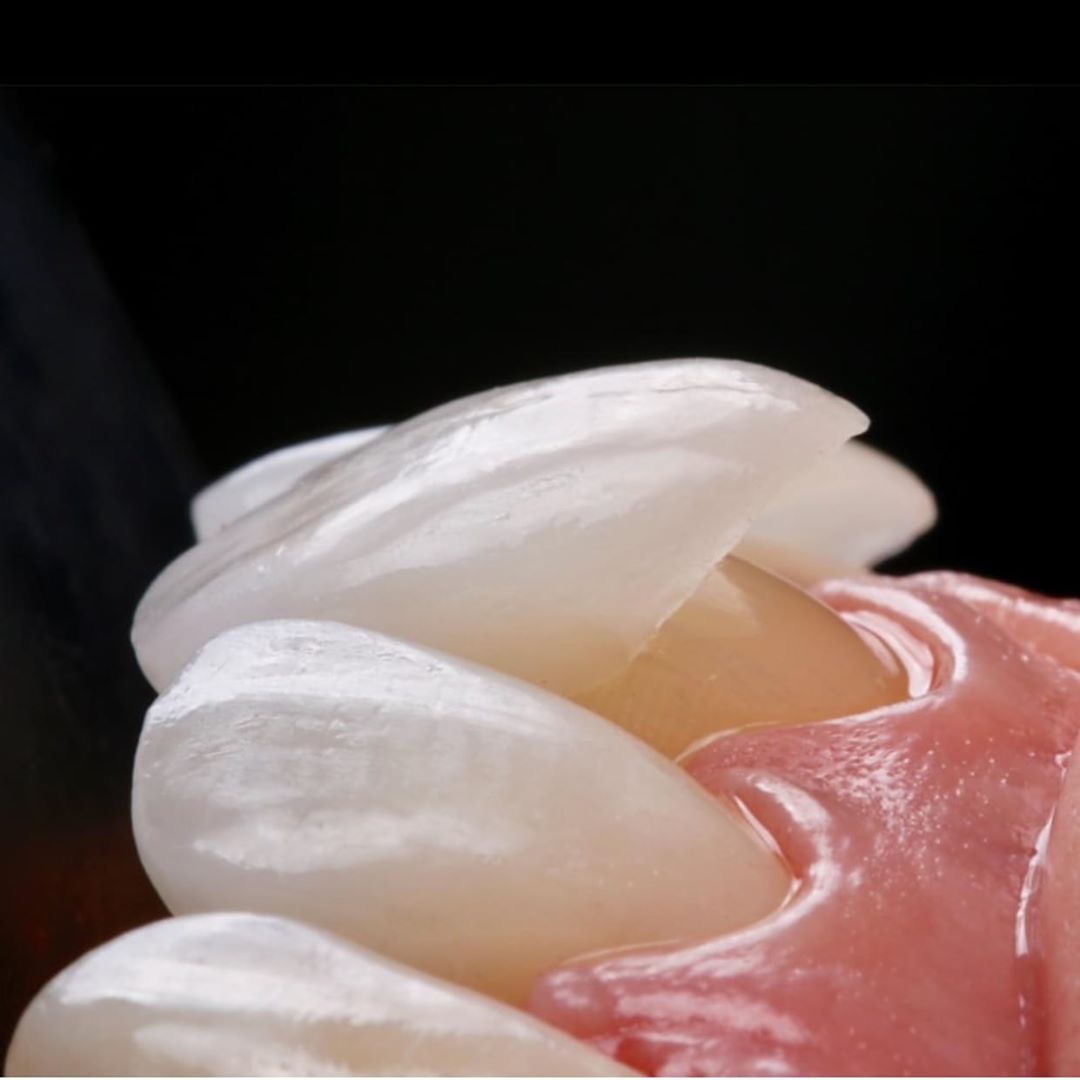
In the anterior region—incisors and canines—wear usually manifests as a progressive shortening of the incisal edges and a loss of the tooth's original shape and proportions. Dental veneers allow for the restoration of the morphology the tooth had before the wear occurred.
In cases of wear, the decision regarding whether minimal enamel preparation is necessary or if the case allows for a no-prep technique is determined exclusively by an individualized diagnosis. When wear has created sufficient space, it may be possible to add ceramic without intervening on the remaining enamel. When the anatomy of the case requires it, minimal preparation is performed—strictly limited to the enamel—to ensure the restoration is correctly integrated with the gums and adjacent teeth.
The design of dental veneers in cases of wear does not start from a predefined model; it is based on the original anatomy of the tooth, reconstructed from photographic documentation, facial proportion analysis, and provisional validation in the mouth using a mock-up.
Composite reconstructions
Direct composite allows for the filling and reconstruction of worn teeth and is primarily indicated for single-tooth restorations or cases of moderate localized wear—when one or a few teeth have lost structure and the rest of the dentition is in good condition. In a single session, composite can restore lost volume with a functional and natural-looking result.
In full-mouth rehabilitations for severe wear—when many teeth are affected and there is a loss of vertical dimension—ceramic is the most predictable long-term definitive solution. Table tops and dental veneers offer greater stability against occlusal forces and superior documented longevity in complex cases.
Composite can play an important role in the provisional phases of a full-mouth rehabilitation as a diagnostic and validation material before the definitive ceramic pieces are fabricated. The choice between composite and ceramic always depends on the individualized diagnosis of the case.
How we plan rehabilitation for tooth wear at our clinic
At Cristina Gras Odontología Restauradora Avanzada, a dental veneer clinic in Barcelona, oral rehabilitation for severe wear follows the GRAS® Method—a 5+1 phase clinical protocol that ensures every decision is made with the necessary information before any intervention on the teeth.
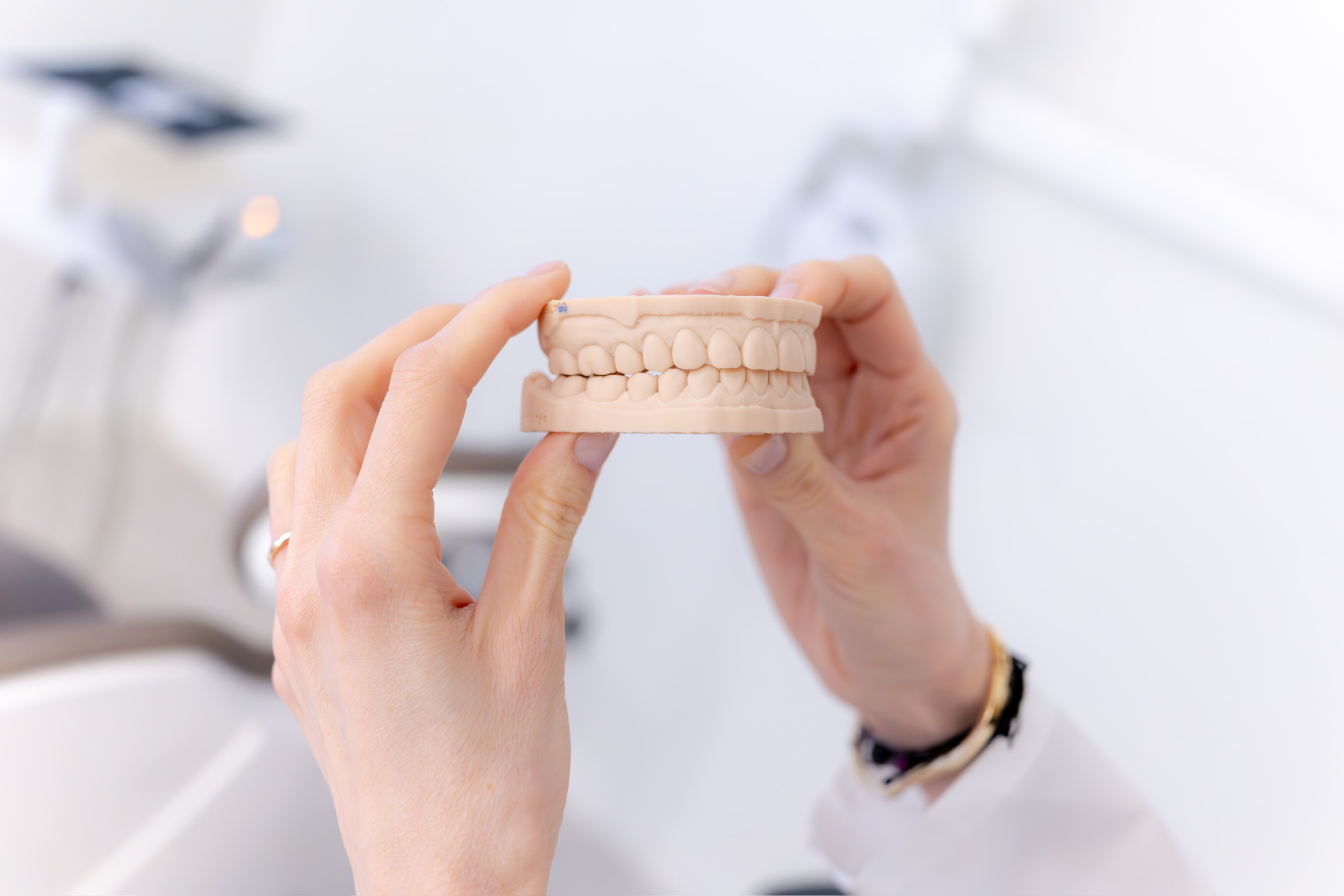
The process begins with the Smile Blueprint — a comprehensive diagnosis that includes a detailed occlusal analysis, periodontal evaluation, standardized clinical photography, and three-dimensional intraoral scanning. The case is evaluated jointly by the team of specialists with the patient present — periodontics, orthodontics, endodontics, implantology, and restorative dentistry all provide their input before any planning takes place.
Once the treatment plan is defined, the Precision Test allows for the design to be validated in the mouth using a temporary restoration that the patient wears in their daily life. They eat with it, speak with it, and see it in the mirror. That information — how that design functions in the person's real life — is what determines if the planning is correct before any final pieces are manufactured.
Only when that validation is complete are the restorations crafted from scratch by a specialized ceramist, using the approved temporary design as an exact reference. Each piece is based on the original anatomy of that specific tooth and person — not on predefined shapes or digital catalogs.
Frequently asked questions about tooth wear
Can the original shape of the teeth be fully recovered?
In most cases of wear, the restoration can restore an anatomy very close to the original — especially when there is prior photographic documentation that allows for the reconstruction of proportions. Digital documentation and facial proportion analysis allow us to design restorations that integrate naturally with the patient's current anatomy.
How many visits does a rehabilitation for severe wear require?
The number of sessions depends on the complexity of the case — the number of teeth affected, the degree of wear, and whether prior treatments such as periodontics or orthodontics are necessary. A complete protocol with diagnosis, temporary restorations, and final restoration usually requires between five and seven visits.
Can the wear reappear after the restoration?
If the cause of the wear is not controlled, it can also affect the restorations. That is why the prior diagnosis is fundamental — identifying whether there is active bruxism, acid erosion, or imbalanced occlusion, and establishing the necessary protective measures before or after treatment, is an essential part of the protocol. If you have bruxism, you can find more information in our article on tooth wear caused by bruxism.
Can worn enamel be recovered?
Enamel does not regenerate on its own. What we do is replace the lost structure with adhesive materials, such as composite or ceramic, and control the cause of the wear to protect what remains. Each case is assessed individually.
How much does it cost to reconstruct worn teeth?
It depends on the number of teeth affected, the material chosen, and the prior treatments that may be necessary, so it is not possible to provide a figure without a diagnosis. The influencing factors are explained in the article on how much porcelain veneers cost in Barcelona.
Cristina Gras Advanced Restorative Dentistry
Paseo de la Bonanova 110, 08017 Barcelona (Sarrià)
institutdentalcristinagras.com · +34 932 157 382
This article is for informational purposes only and does not constitute medical or dental advice. It does not in any way replace an individualized clinical assessment by a licensed dentist. Any decision regarding dental treatment must be made after an examination and diagnosis by the dentist responsible for the case.