Data Controller: INSTITUT DENTAL CRISTINA GRAS, S.L.P. Purpose of processing: we will use your data to schedule visits and address your questions, inquiries, and suggestions. Data subject rights: You may exercise your rights of access, rectification, erasure, and portability of your data, as well as restriction and objection to its processing at info@institutdentalcristinagras.com. More information: in our privacy policy
Data Controller: INSTITUT DENTAL CRISTINA GRAS, S.L.P. Purpose of processing: we will use your data to schedule visits and address your questions, inquiries, and suggestions. Data subject rights: You may exercise your rights of access, rectification, erasure, and portability of your data, as well as restriction and objection to its processing at info@institutdentalcristinagras.com. More information: in our privacy policy
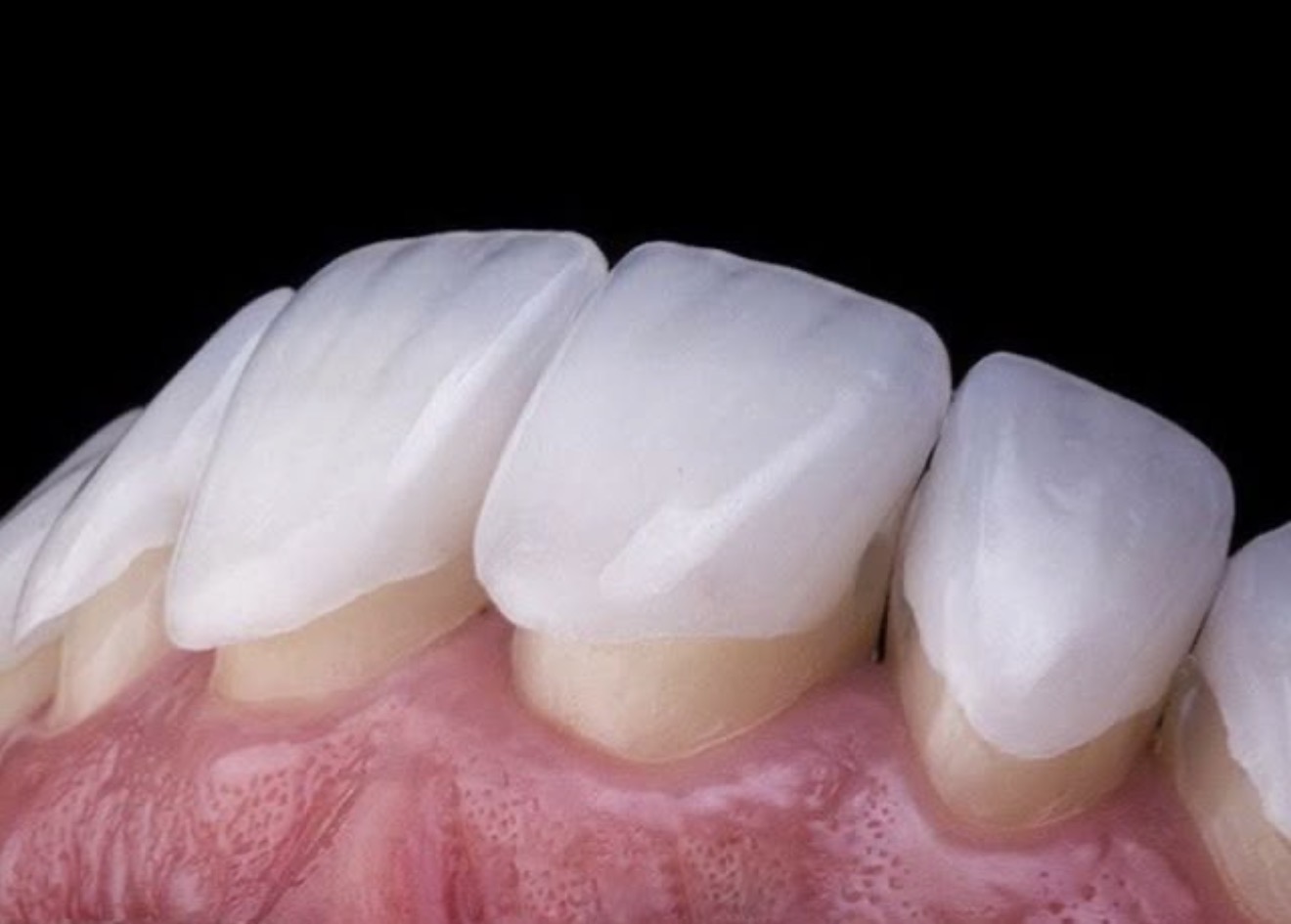
One of the most common questions in adhesive dentistry is why a veneer or micro-veneer might debond or fracture over time. In most cases, it is not the material itself, but rather factors related to the indication, function, and treatment planning.
Before placing an adhesive restoration, such as veneers or micro-veneers, it is essential to understand how the patient bites, how the jaw moves when speaking or chewing, and what factors have caused previous tooth wear.
Why might a veneer debond?
When a veneer detaches or fractures, there is rarely a single cause. It is usually a combination of factors related to oral function and biomechanics, especially in treatments involving veneers or adhesive micro-veneers.
Many patients come to the clinic with previous veneers that have failed over time. In many cases, the problem was not the material used, but rather that the patient's oral function was not studied in detail before treatment.
The stability of an adhesive restoration depends on it being correctly integrated into the masticatory system. If function is not balanced, forces can concentrate in specific areas and compromise the adhesion or the structure of the veneer.
Factors influencing debonding
The condition of the enamel is one of the key elements in adhesive dentistry, both for veneers and micro-veneers. Adhesion is more predictable when there is sufficient healthy enamel. If the tooth shows severe wear, extensive previous restorations, or significant structural loss, stability may be compromised.
Isolation during the procedure is also a determining factor. The adhesive technique requires a controlled environment to ensure a stable bond between the tooth and the restoration.
Another fundamental factor is function and occlusion. Before starting any treatment with veneers or micro-veneers, it is important to analyze how the patient bites and how the jaw behaves during functional movements. If these aspects are not correctly assessed, overloads can be generated that promote debonding or fracture.
High masticatory forces or the presence of habits such as bruxism also influence the durability of veneers and micro-veneers. When repetitive or parafunctional loads exist, the risk of failure increases if the treatment has not been planned with this situation in mind.
Finally, planning and restorative design are decisive. Studying the case beforehand, analyzing existing wear, and understanding why certain fractures have occurred helps to propose a more stable treatment tailored to each patient.
Common errors in indication
One of the most common errors is indicating veneers or micro-veneers without performing a complete functional analysis.
It is also common to rely solely on the material, assuming that it will guarantee stability on its own. However, no material can compensate for insufficient planning.
Applying standard solutions to different cases is another risk factor. Each patient has their own masticatory dynamics and specific structural conditions that must be assessed before deciding on treatment with veneers or micro-veneers.
What is assessed before indicating an adhesive restoration
Before placing veneers or micro-veneers, a complete diagnosis must be performed. This includes analyzing the condition of the teeth, the wear pattern, and functional stability.
Studying occlusion and mandibular movements helps us understand how forces are distributed when speaking and chewing. This information is essential for designing a restoration that integrates in a balanced way.
Planning is not just about an immediate result, but about medium- and long-term stability. That is why the diagnostic phase is the foundation of treatment.
If you would like to know more about the diagnostic process, you can visit the page for First visit and diagnosis.
You can also find more information on indications and criteria in the section on Veneers and micro-veneers.
Frequently asked questions
Does the material prevent a veneer from debonding?
Not necessarily. Although current materials offer high strength and good adhesion, the stability of veneers and micro-veneers depends largely on planning and prior functional analysis.
Does bruxism have an influence?
Yes. Repetitive or excessive forces can increase the risk of fracture or debonding of veneers if they have not been taken into account during planning.
Can a veneer be re-cemented?
It depends on the condition of the restoration and the tooth. In some cases, it is possible to re-cement a veneer, but it is always necessary to assess the cause of the failure before deciding.
What happens if there is little enamel?
Adhesion is more predictable on enamel. When there is a limited amount available, the risk of failure for veneers or micro-veneers may increase, and the indication must be carefully evaluated.
Conclusion
For an adhesive restoration, such as veneers or micro-veneers, to be stable over time, the indication and functional planning are just as important as the material. Analyzing how the mouth functions and understanding the causes of previous wear allows for the design of more precise and conservative treatments.
Data Controller: INSTITUT DENTAL CRISTINA GRAS, S.L.P. Purpose of processing: we will use your data to schedule visits and address your questions, inquiries, and suggestions. Data subject rights: You may exercise your rights of access, rectification, erasure, and portability of your data, as well as restriction and objection to its processing at info@institutdentalcristinagras.com. More information: in our privacy policy
Data Controller: INSTITUT DENTAL CRISTINA GRAS, S.L.P. Purpose of processing: we will use your data to schedule visits and address your questions, inquiries, and suggestions. Data subject rights: You may exercise your rights of access, rectification, erasure, and portability of your data, as well as restriction and objection to its processing at info@institutdentalcristinagras.com. More information: in our privacy policy
Data Controller: INSTITUT DENTAL CRISTINA GRAS, S.L.P. Purpose of processing: we will use your data to schedule visits and address your questions, inquiries, and suggestions. Data subject rights: You may exercise your rights of access, rectification, erasure, and portability of your data, as well as restriction and objection to its processing at info@institutdentalcristinagras.com. More information: in our privacy policy