Data Controller: INSTITUT DENTAL CRISTINA GRAS, S.L.P. Purpose of processing: we will use your data to schedule visits and address your questions, inquiries, and suggestions. Data subject rights: You may exercise your rights of access, rectification, erasure, and portability of your data, as well as restriction and objection to its processing at info@institutdentalcristinagras.com. More information: in our privacy policy
Data Controller: INSTITUT DENTAL CRISTINA GRAS, S.L.P. Purpose of processing: we will use your data to schedule visits and address your questions, inquiries, and suggestions. Data subject rights: You may exercise your rights of access, rectification, erasure, and portability of your data, as well as restriction and objection to its processing at info@institutdentalcristinagras.com. More information: in our privacy policy
Patients often come to the clinic due to a fractured tooth, a lost restoration, or discomfort such as wear or sensitivity. However, during the evaluation, what is most striking in many cases is not the tooth, but the condition of the gums.
Before planning any treatment, it is essential to assess whether the tissues are healthy.
Why is it important to evaluate the gums before treating a tooth?
When a patient presents with a fracture, wear, or a lost restoration, it may seem that the main problem lies with the tooth. However, the stability of any treatment does not depend solely on the tooth itself.
The condition of the tissues surrounding the tooth is a determining factor. Inflamed gums or signs of bleeding indicate an underlying process that must be addressed before intervening.
That is why, during the clinical evaluation, the analysis does not focus solely on the tooth, but on the entire periodontal system.
Signs that indicate gums are not healthy
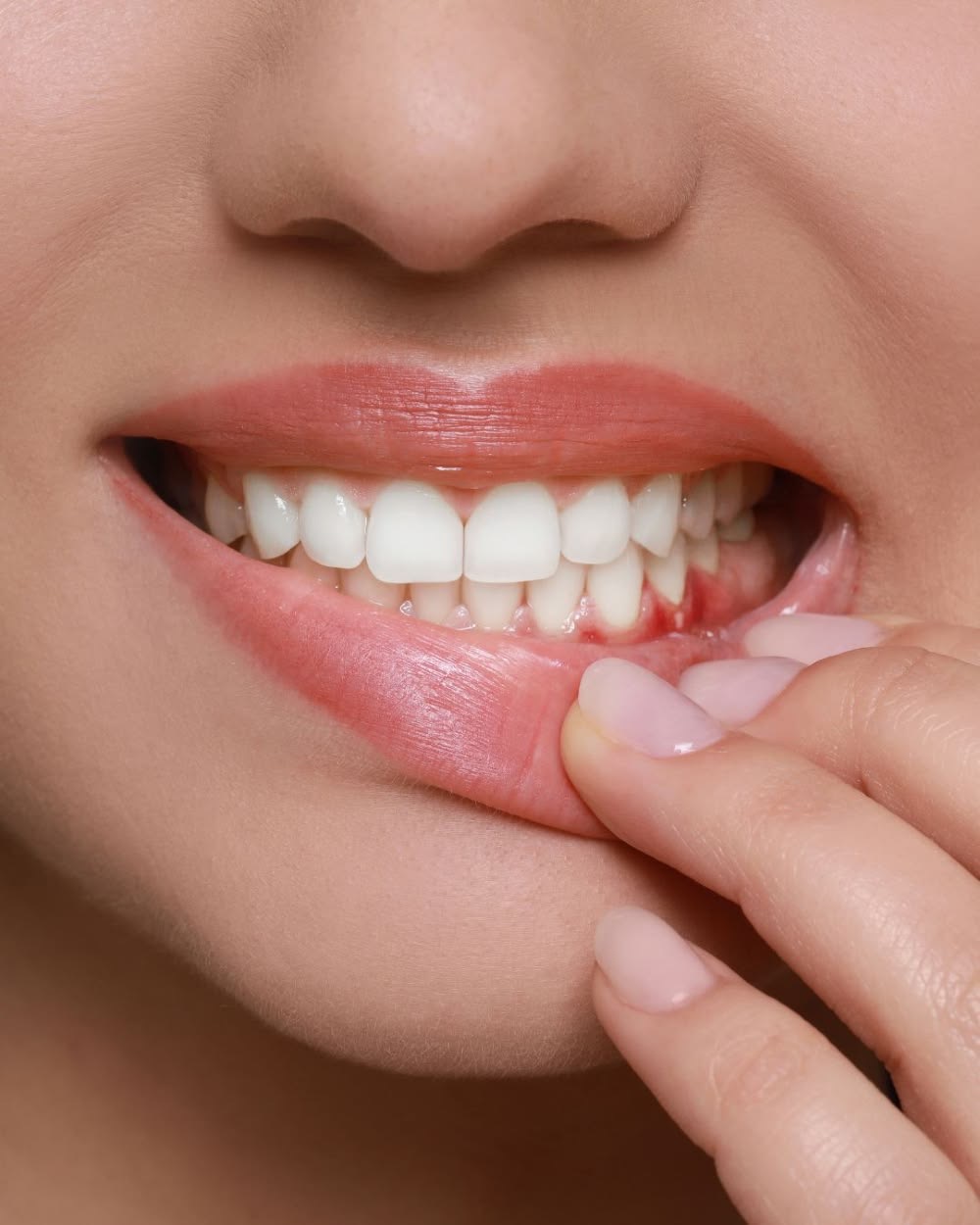
In many cases, gums show inflammation or bleeding, whether during brushing or even while talking. Although some patients consider this normal, it is not a healthy sign.
Bleeding is an indicator of inflammation. If not treated in time, it can progress and affect the tooth's supporting tissues, including the bone.
Detecting these signs at an early stage allows for a more conservative approach and helps avoid medium- and long-term complications.
Why shouldn't treatment be performed without healthy gums?
Before repairing a fracture or placing a restoration, it is necessary to ensure that the tissues are in proper condition.
If the gums are not healthy, any treatment can be compromised over time. Inflammation and a lack of tissue stability directly affect the outcome and its durability.
That is why the order of treatment is key: first, the tissues are stabilized, and then the restorations are planned.
Common misconceptions in patient perception
One of the most common misconceptions is believing that bleeding gums are normal. In reality, it is a clinical sign that indicates the presence of inflammation.
It is also common to focus attention solely on the tooth with the visible problem, without considering the state of the surrounding tissues. This partial view can lead to planning treatments without an adequate foundation.
What is assessed during the initial evaluation?
During the first visit, we analyze not only the condition of the tooth but also the gum health and supporting tissues.
This approach allows us to understand the root of the problem and establish a more stable treatment plan tailored to each individual case.
If you would like to learn more about this process, you can visit the page for First visit and diagnosis.
Frequently asked questions
Is it normal for gums to bleed when brushing?
No. Bleeding is a sign of inflammation and should be evaluated to prevent the problem from progressing.
Can treatment be performed if the gums are inflamed?
It depends on the case, but in most situations, it is necessary to stabilize the tissues first before proceeding with treatment.
Can gum health affect the outcome?
Yes. The stability and longevity of any treatment depend largely on the condition of the tissues.
What happens if inflammation is not treated?
It can progress and affect the tooth's supporting tissues, including the bone.
The foundation of successful treatment: gum health
Before considering tooth repair, it is essential to ensure that the tissues are healthy. Gum health is not just another step in the treatment process; it is the foundation upon which any clinical plan is built.
Evaluating periodontal status allows us to design more stable, precise, and conservative treatments for the medium and long term.
This article is based on the clinical explanation provided by Dr. Cristina Gras, who emphasizes that gum health is fundamental to ensuring the success of any dental treatment.
Data Controller: INSTITUT DENTAL CRISTINA GRAS, S.L.P. Purpose of processing: we will use your data to schedule visits and address your questions, inquiries, and suggestions. Data subject rights: You may exercise your rights of access, rectification, erasure, and portability of your data, as well as restriction and objection to its processing at info@institutdentalcristinagras.com. More information: in our privacy policy
Data Controller: INSTITUT DENTAL CRISTINA GRAS, S.L.P. Purpose of processing: we will use your data to schedule visits and address your questions, inquiries, and suggestions. Data subject rights: You may exercise your rights of access, rectification, erasure, and portability of your data, as well as restriction and objection to its processing at info@institutdentalcristinagras.com. More information: in our privacy policy
Data Controller: INSTITUT DENTAL CRISTINA GRAS, S.L.P. Purpose of processing: we will use your data to schedule visits and address your questions, inquiries, and suggestions. Data subject rights: You may exercise your rights of access, rectification, erasure, and portability of your data, as well as restriction and objection to its processing at info@institutdentalcristinagras.com. More information: in our privacy policy