Data Controller: INSTITUT DENTAL CRISTINA GRAS, S.L.P. Purpose of processing: we will use your data to schedule visits and address your questions, inquiries, and suggestions. Data subject rights: You may exercise your rights of access, rectification, erasure, and portability of your data, as well as restriction and objection to its processing at info@institutdentalcristinagras.com. More information: in our privacy policy
Data Controller: INSTITUT DENTAL CRISTINA GRAS, S.L.P. Purpose of processing: we will use your data to schedule visits and address your questions, inquiries, and suggestions. Data subject rights: You may exercise your rights of access, rectification, erasure, and portability of your data, as well as restriction and objection to its processing at info@institutdentalcristinagras.com. More information: in our privacy policy
It is one of the most frequently asked questions: how long will this restoration last? The honest answer is that it depends—not primarily on the type of material, but on the clinical decisions made before it was placed.
This article explains the two factors that most influence the longevity of any dental restoration, whether it is a porcelain veneer, a composite reconstruction, or a ceramic crown.
This article is for informational purposes only. The indication and prognosis for any treatment must be assessed by a specialized dentist following an individualized examination of the case.
The bonding surface
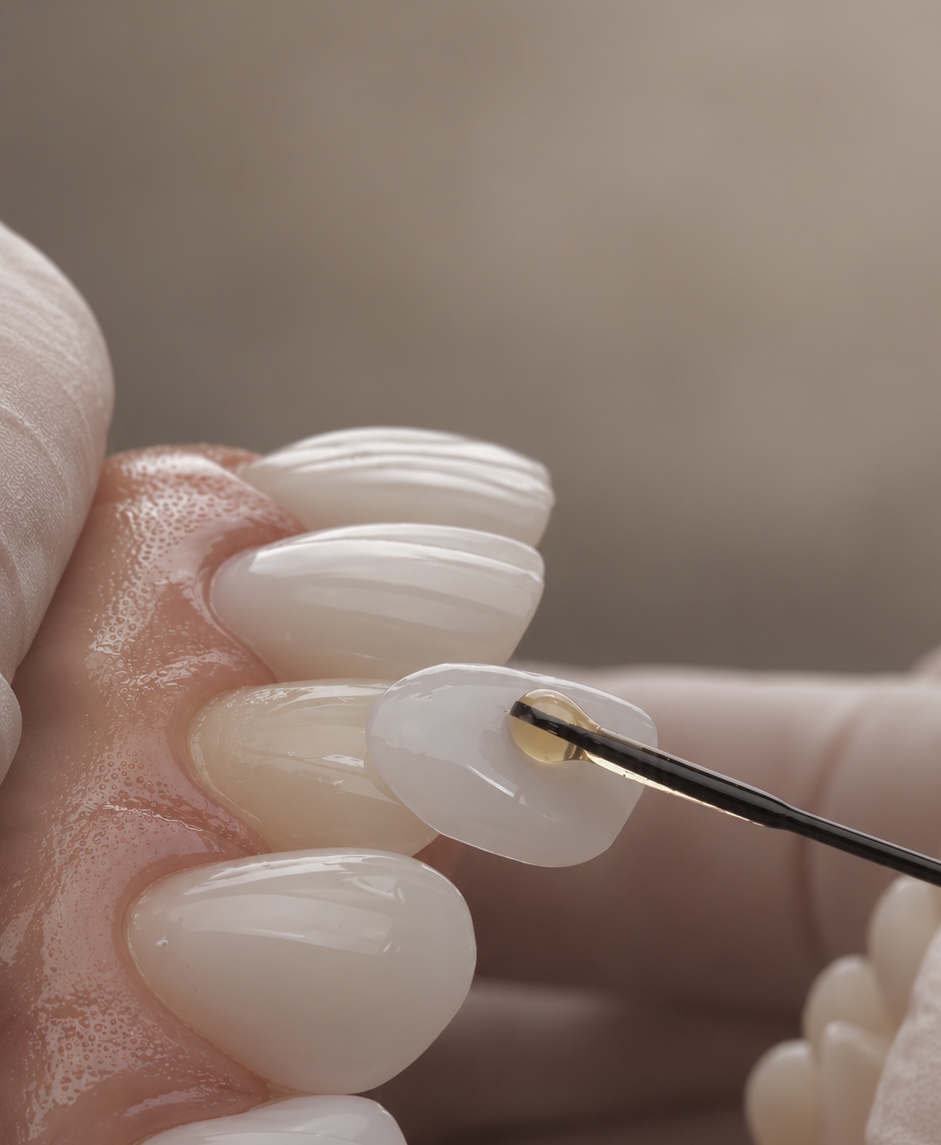
Dental enamel provides the most stable bonding surface available for any ceramic or composite restoration. When the restoration is supported primarily by dentin—for example, following more aggressive previous preparations or loss of structure due to decay—bonding is technically more demanding and requires specific protocols.
It is not a contraindication, but it is a factor that influences the long-term prognosis.
Control of occlusal forces
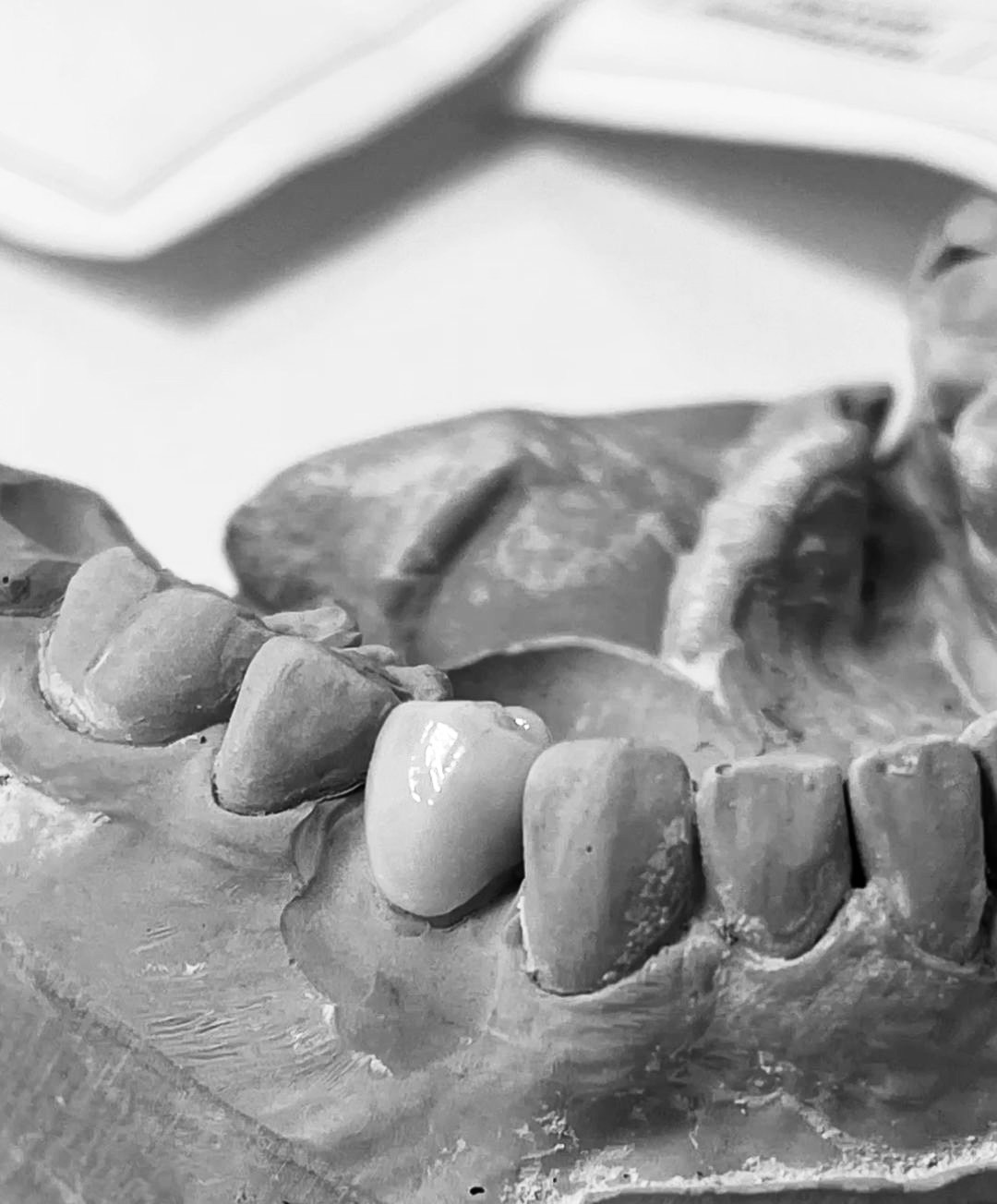
A restoration—whether a veneer, composite, or crown—placed in an occlusal scheme with interferences will be subjected to forces for which it was not designed. It does not fail because it was poorly made, but because the loads it bears are not appropriate.
That is why a prior occlusal analysis and verification using a mock-up are essential parts of the protocol, regardless of the material chosen.
General differences between materials
Feldspathic porcelain offers great optical naturalness and good longevity when bonded to enamel. Lithium disilicate and zirconia offer greater mechanical strength and are indicated for cases with higher occlusal loads or bruxism.
Direct composite allows for functional results in a single session, although its wear and color changes over time are usually greater than those of ceramic in long-term treatments.
What truly determines longevity
The material matters. The technique matters. But the factor that most determines whether a restoration will last for years or cause early problems is the quality of the diagnosis and the decisions made before intervening.
That does not change, regardless of the material ultimately chosen.
Every phase of the GRAS® Method—from the initial diagnosis to the final check-up—exists precisely to maximize that longevity, regardless of whether the final restoration is a veneer, a composite reconstruction, or a ceramic crown.
Cristina Gras Advanced Restorative Dentistry Paseo de la Bonanova 110, 08017 Barcelona (Sarrià) institutdentalcristinagras.com · +34 932 157 382
This article is for informational purposes only and does not constitute medical or dental advice. It is not a substitute for an individualized clinical assessment by a licensed dentist.
Data Controller: INSTITUT DENTAL CRISTINA GRAS, S.L.P. Purpose of processing: we will use your data to schedule visits and address your questions, inquiries, and suggestions. Data subject rights: You may exercise your rights of access, rectification, erasure, and portability of your data, as well as restriction and objection to its processing at info@institutdentalcristinagras.com. More information: in our privacy policy
Data Controller: INSTITUT DENTAL CRISTINA GRAS, S.L.P. Purpose of processing: we will use your data to schedule visits and address your questions, inquiries, and suggestions. Data subject rights: You may exercise your rights of access, rectification, erasure, and portability of your data, as well as restriction and objection to its processing at info@institutdentalcristinagras.com. More information: in our privacy policy
Data Controller: INSTITUT DENTAL CRISTINA GRAS, S.L.P. Purpose of processing: we will use your data to schedule visits and address your questions, inquiries, and suggestions. Data subject rights: You may exercise your rights of access, rectification, erasure, and portability of your data, as well as restriction and objection to its processing at info@institutdentalcristinagras.com. More information: in our privacy policy