Data Controller: INSTITUT DENTAL CRISTINA GRAS, S.L.P. Purpose of processing: we will use your data to schedule visits and address your questions, inquiries, and suggestions. Data subject rights: You may exercise your rights of access, rectification, erasure, and portability of your data, as well as restriction and objection to its processing at info@institutdentalcristinagras.com. More information: in our privacy policy
Data Controller: INSTITUT DENTAL CRISTINA GRAS, S.L.P. Purpose of processing: we will use your data to schedule visits and address your questions, inquiries, and suggestions. Data subject rights: You may exercise your rights of access, rectification, erasure, and portability of your data, as well as restriction and objection to its processing at info@institutdentalcristinagras.com. More information: in our privacy policy
One of the most common situations in an initial restorative dentistry consultation is the patient who arrives having done their own research and with a clear idea of the type of treatment they want. In many cases, that idea is based on content they have consumed on social media or clinic websites, where terms like "no-prep micro-veneers" or "no-prep veneers" appear associated with a clear and unquestionable advantage: not intervening on the natural enamel.
The clinical reality is more nuanced. The no-prep technique is a clinical indication with precise criteria, not a universally superior option. When applied to the right case, it produces clinically excellent results and preserves healthy tooth structure to the maximum. When applied to a case where it is not indicated, it produces morphologically incorrect results that can compromise both function and periodontal health.
This article explains, from a clinical perspective, what distinguishes both techniques and what factors determine which one is appropriate in each case. The specific indication for an individual case is a decision that belongs exclusively to the responsible dentist after a complete examination.
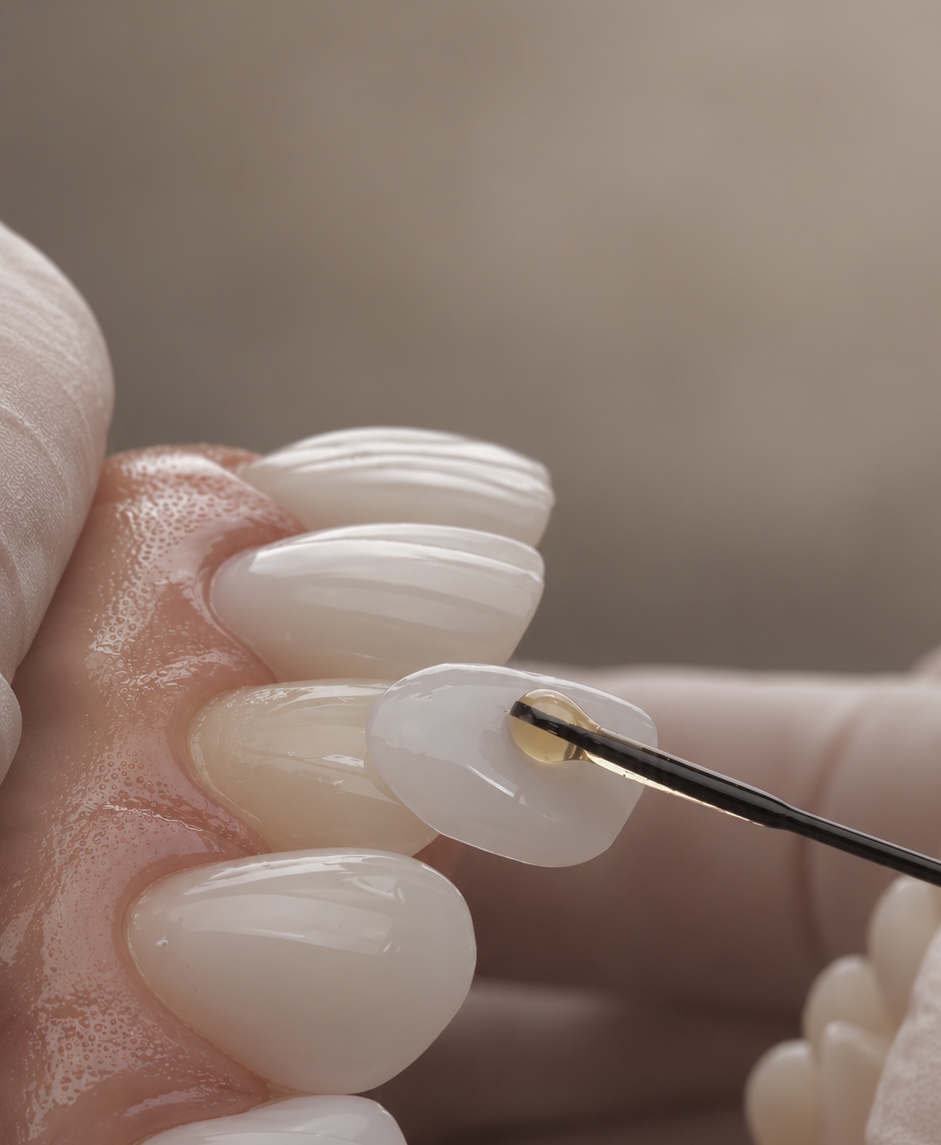
These are indirect ceramic restorations that require controlled removal of the tooth's vestibular surface before placement, usually between 0.3 and 0.7 mm of enamel. The preparation serves two functions: creating the necessary space for the volume of the restoration without over-contouring the tooth, and generating a uniform and predictable bonding surface.
Enamel preparation is, in most cases, an irreversible procedure. Once performed, the tooth is permanently conditioned to require a restoration.
No-prep micro-veneers
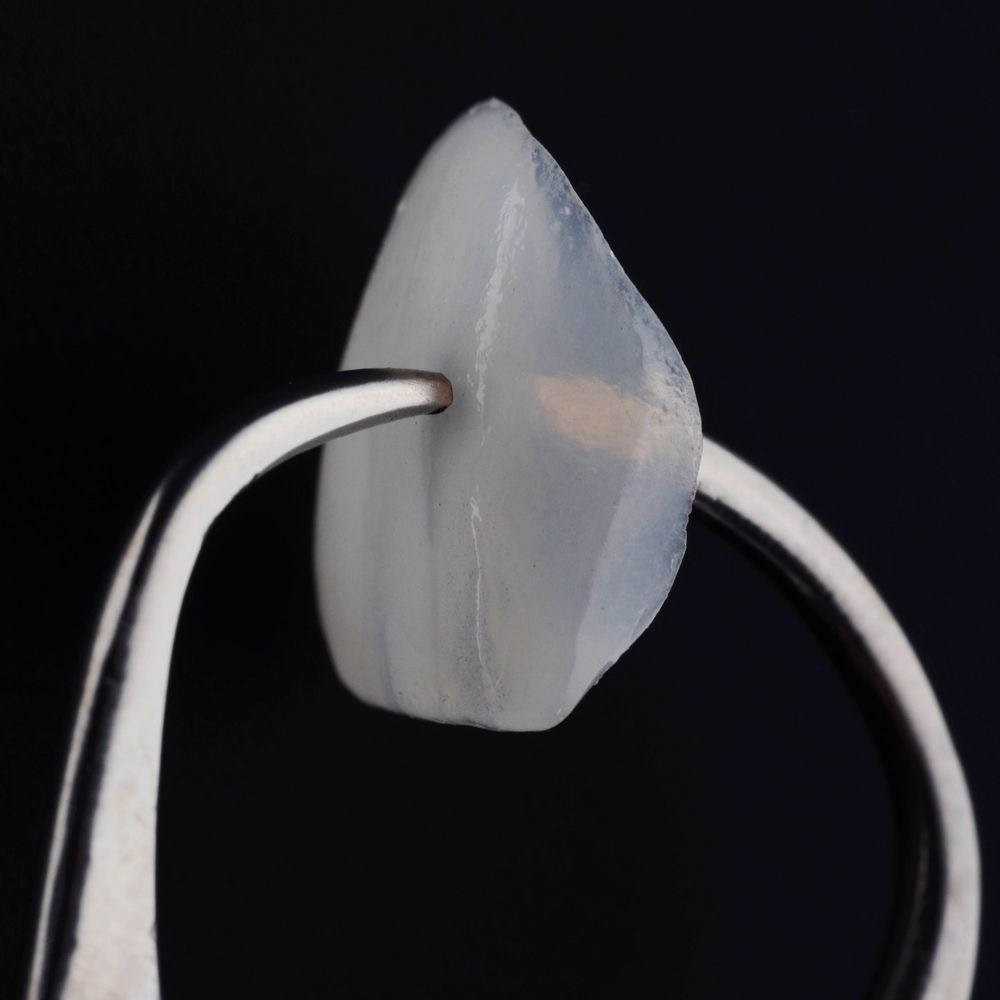
These are ultra-thin ceramic restorations—between 0.2 and 0.5 mm—that are bonded directly onto intact enamel without requiring prior preparation, or with minimal selective micro-abrasion in specific cases.
Their clinical viability depends on a fundamental anatomical factor: that the starting tooth has a volume or shape deficit that allows for the addition of ceramic material without compromising the final contour of the restoration. When this condition is not met, adding material to a tooth with adequate volume produces an over-contoured result that is morphologically incorrect and unfavorable for the surrounding periodontal tissues.
What determines the indication
In our clinical practice, the question that guides the selection of the technique is not "what does the patient prefer?" but "what does the starting anatomy allow?". These are two very different questions with answers that may not coincide.
Situations where the no-prep technique may be appropriate
Teeth with volume loss: patients with wear due to bruxism, acid erosion, or abrasion who have lost tooth length or thickness. Adding ceramic over this worn enamel restores the lost volume without creating over-contouring.
Closing interdental spaces: closing diastemas by adding material is one of the clearest and most predictable indications for the no-prep technique.
Moderate chromatic alterations in teeth with correct morphology: when the main alteration is color and the tooth has good shape and volume, the placement of an ultra-thin ceramic layer without intervening on the structure can be considered.
Teeth with proper position and angulation: the no-prep technique is not capable of resolving clinically significant dental malpositions.
Situations where minimal enamel preparation is necessary
Teeth with normal or increased volume: placing micro-veneers on teeth that already have the correct volume produces over-contoured restorations that alter the emergence profile, hinder interproximal hygiene, and generate a result that does not integrate harmoniously.
Intense chromatic alterations: severe staining—fluorosis, tetracycline staining, darkening due to pulp necrosis—requires greater ceramic thickness to mask the substrate. This thickness can only be obtained through prior preparation.
Significant shape or position alterations: irregular morphologies, extensive fractures, or malpositions that require volume redistribution need preparation to properly distribute the material.
Uncontrolled active bruxism: parafunctional forces can compromise the adhesion of ultra-thin restorations. The responsible dentist will evaluate in each case whether preparation, prior treatment of bruxism, or both are necessary.
When preparation is clinically necessary, the goal is for it to be the minimum the case allows. The reason is not only to preserve as much healthy tooth structure as possible—which is in itself a fundamental clinical criterion—but also to ensure that the restoration is bonded to enamel and not dentin. This distinction has direct and documented consequences for the longevity of the restoration: bonding to enamel is significantly more stable and durable than bonding to dentin, because enamel offers a more homogeneous, less permeable surface with higher surface energy for adhesive cementation. In our clinic, the minimal preparation criterion is not a philosophical preference: it is a technical decision aimed at maximizing the enamel bonding surface and, thereby, the clinical durability of each restoration.
The most frequent error: applying the no-prep technique where it is not indicated
This is the problem we observe most frequently in patients who come to the clinic dissatisfied with previous restorations.
The mechanism is understandable: the patient arrives convinced they do not want their tooth touched, and the professional—to facilitate the process or avoid conflict with expectations—agrees to perform the no-prep technique regardless of whether the case indicates it. The result is over-contoured restorations that:
Alter the emergence profile and accumulate plaque at the gingival margin
Produce a morphological result that is foreign to natural anatomy
Generate occlusal interferences that, in the long term, can cause joint discomfort or compromise the integrity of the restoration
The inverse error—grinding healthy enamel when it is not necessary—has equally significant consequences. Enamel does not regenerate. Its loss, however minimal, is permanent. Preserving the maximum possible healthy tooth structure is always the priority when the anatomy of the case allows it.
Why the mock-up is essential for making this decision
The most objective way to determine which technique is appropriate for a specific case is the mock-up: a provisional replica of the final restoration, made of direct resin, which is tested on the patient's teeth before performing any irreversible intervention.
If the provisional correctly reproduces morphology and function without the need to prepare the tooth, the no-prep technique is viable. If the resulting volume is excessive or the contour is morphologically incorrect, it indicates that prior preparation is necessary.
The mock-up is not an optional step in the protocol. It is the instrument that turns a decision based on estimation into a decision based on objective clinical evidence.
Furthermore, it allows the patient to evaluate the morphology and function of the restoration for 24 to 48 hours in their daily life, before committing to any definitive solution.
What distinguishes a rigorous mock-up from one that is merely indicative is what happens after the first intraoral trial. The provisional is evaluated at rest, while smiling, and during speech: three functional situations with different morphological demands that are rarely resolved simultaneously in the first version. Based on that evaluation, the dentist touches up, adjusts, and refines the provisional until the restoration integrates coherently with the patient's complete facial anatomy, not just the teeth. This adjustment process is inherently personal: it reflects the clinical judgment, morphological sensitivity, and accumulated experience of each dentist. That is why no two designs are the same, neither between patients nor between professionals. The result of a ceramic restoration planned with this level of detail is, by definition, unrepeatable.
A protocol that omits this phase makes irreversible clinical decisions without the information necessary to guarantee the result. In our experience, when we see patients who are not satisfied with previous restorations, the absence of the mock-up in the process is one of the factors that appears most frequently.
The mock-up also determines something with direct consequences for longevity: if preparation is necessary, it allows for the exact definition of how much is strictly essential. Minimizing preparation is not just a matter of preserving healthy structure—it is a decision that preserves the greatest possible surface area for enamel bonding, which offers a significantly more stable and durable adhesive bond than dentin. Every tenth of a millimeter of preserved enamel is long-term bonding gained.
Longevity of both techniques
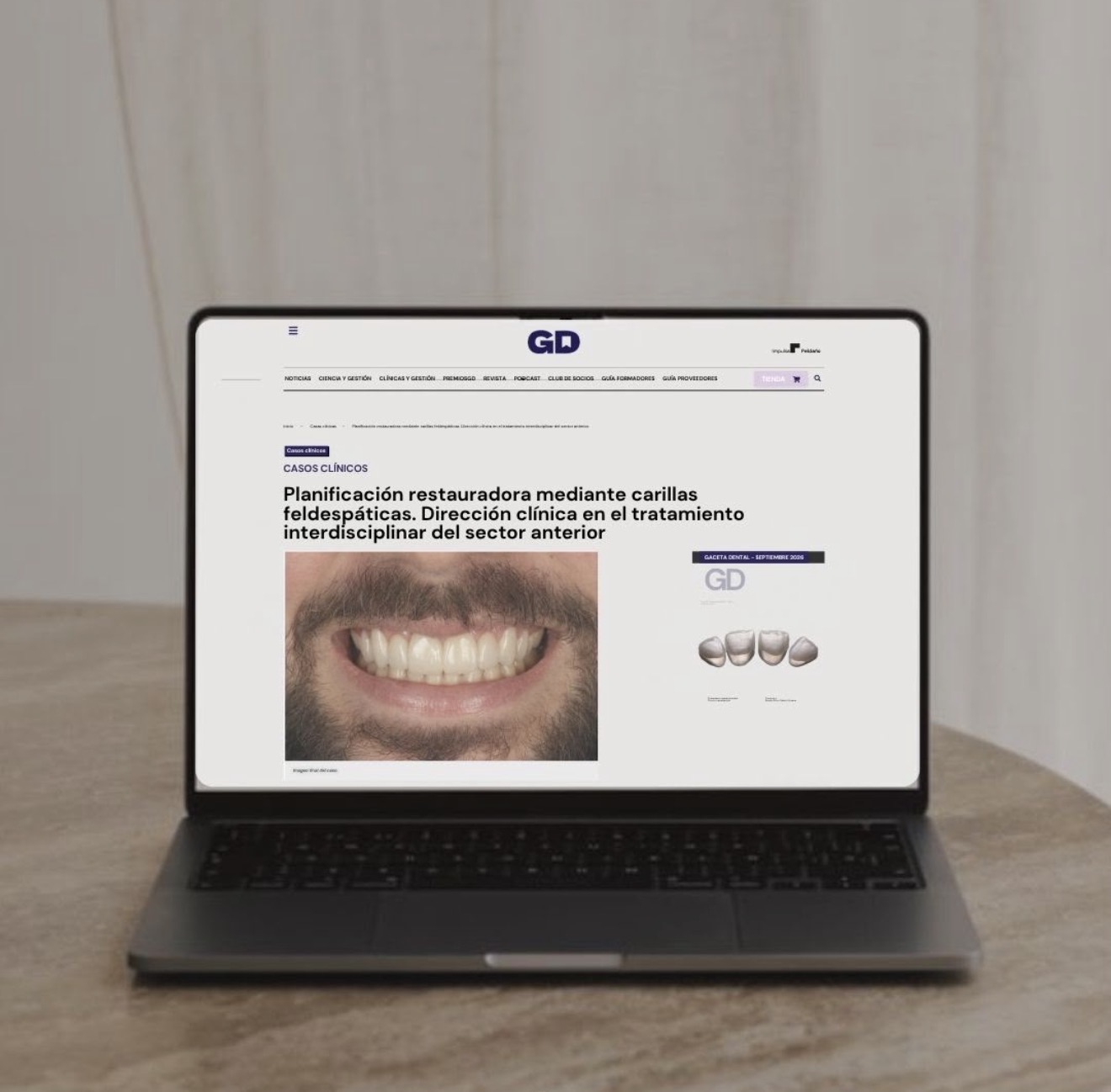
Scientific literature on feldspathic porcelain veneers with conventional preparation documents survival rates exceeding 90% at 10 years when the indication is correct and maintenance is adequate. Available data on no-prep micro-veneers, a more recent technique with less systematic follow-up time, show comparable results at 5-7 years in correctly selected cases.
In both techniques, the factors with the greatest influence on longevity are the control of parafunctions such as bruxism, the maintenance of periodontal health, and the performance of periodic check-ups that allow for the early detection of any changes before they compromise the restoration.
A final reflection
The choice between no-prep micro-veneers and minimally prepared veneers is not a decision that a patient can make autonomously. It is a clinical indication that the dentist determines after a complete diagnosis of the case. The fact that a technique preserves intact enamel is a real clinical advantage when indicated. When it is not, that same advantage becomes the source of the problem.
This article is for informational purposes only and does not constitute medical or dental advice. It does not in any way replace an individualized clinical assessment by a licensed dentist. The indication for any dental treatment must be determined by the responsible dentist after a complete clinical examination of the case.
Dr. Cristina Gras practices advanced restorative dentistry in Barcelona (Paseo de la Bonanova 110, Sarrià). More information at institutdentalcristinagras.com
Data Controller: INSTITUT DENTAL CRISTINA GRAS, S.L.P. Purpose of processing: we will use your data to schedule visits and address your questions, inquiries, and suggestions. Data subject rights: You may exercise your rights of access, rectification, erasure, and portability of your data, as well as restriction and objection to its processing at info@institutdentalcristinagras.com. More information: in our privacy policy
Data Controller: INSTITUT DENTAL CRISTINA GRAS, S.L.P. Purpose of processing: we will use your data to schedule visits and address your questions, inquiries, and suggestions. Data subject rights: You may exercise your rights of access, rectification, erasure, and portability of your data, as well as restriction and objection to its processing at info@institutdentalcristinagras.com. More information: in our privacy policy
Data Controller: INSTITUT DENTAL CRISTINA GRAS, S.L.P. Purpose of processing: we will use your data to schedule visits and address your questions, inquiries, and suggestions. Data subject rights: You may exercise your rights of access, rectification, erasure, and portability of your data, as well as restriction and objection to its processing at info@institutdentalcristinagras.com. More information: in our privacy policy