Data Controller: INSTITUT DENTAL CRISTINA GRAS, S.L.P. Purpose of processing: we will use your data to schedule visits and address your questions, inquiries, and suggestions. Data subject rights: You may exercise your rights of access, rectification, erasure, and portability of your data, as well as restriction and objection to its processing at info@institutdentalcristinagras.com. More information: in our privacy policy
Data Controller: INSTITUT DENTAL CRISTINA GRAS, S.L.P. Purpose of processing: we will use your data to schedule visits and address your questions, inquiries, and suggestions. Data subject rights: You may exercise your rights of access, rectification, erasure, and portability of your data, as well as restriction and objection to its processing at info@institutdentalcristinagras.com. More information: in our privacy policy
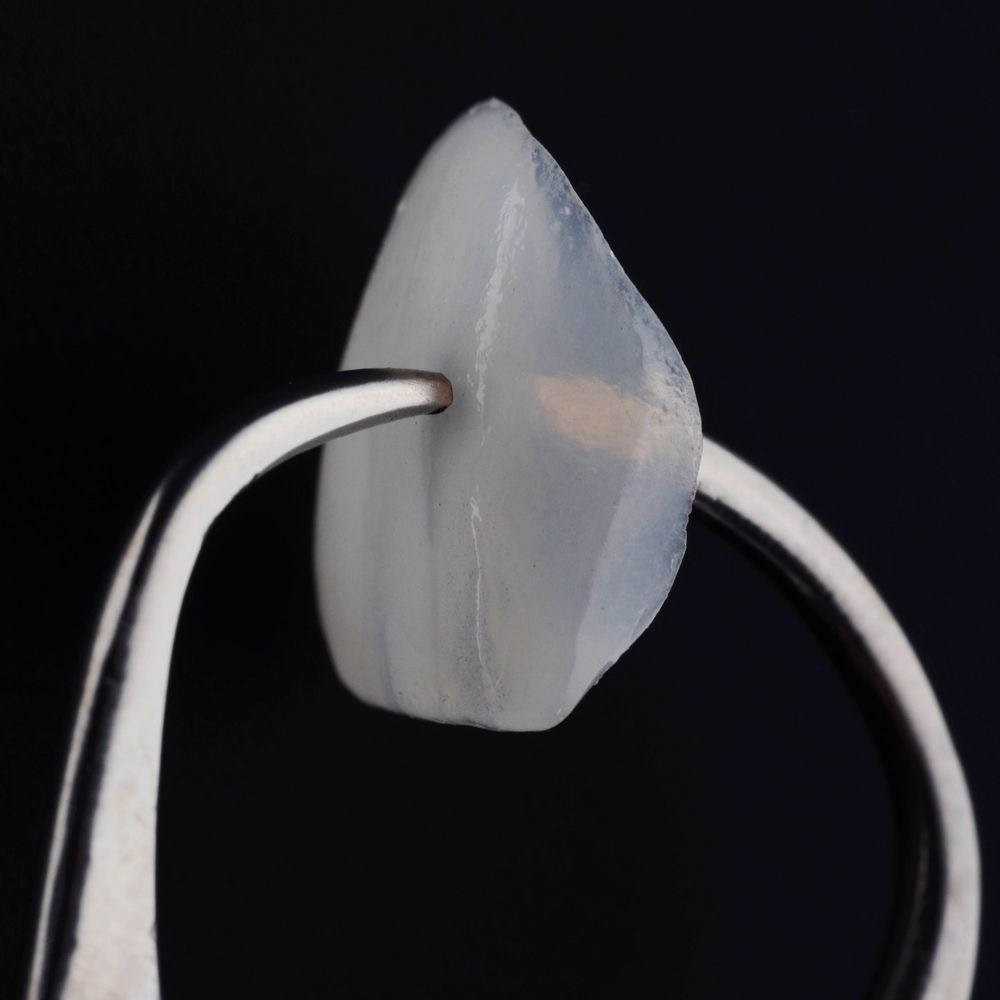
Some patients come to the clinic asking for dental veneers, but after the diagnosis, the answer is not yes. Not because it cannot be done technically, but because doing so would not be the right choice for that specific case at that time.
Saying no at the right time is a part of clinical judgment that is rarely explained to the patient. This article describes the most frequent situations in which the recommendation for dental veneers is postponed or reconsidered, and why that decision protects the long-term outcome.
This article is for informational purposes only. The indication for any restorative treatment must be determined by a specialized dentist following an individualized examination of the case.
When the occlusion is not resolved
A ceramic restoration placed on an unstable occlusion—with interferences, overloading at certain contact points, or an absence of functional canine guidance—has a compromised prognosis from the start. The veneers will be subjected to forces they are not designed for, regardless of the quality of the material or the technique used.
When the occlusal analysis detects this type of situation, the correct approach is to explain it to the patient and propose resolving the cause first—through occlusal adjustment, bruxism treatment, or, in some cases, prior orthodontics—before planning any definitive restoration.
When there is active periodontal disease
The gum is the biological foundation upon which any ceramic restoration rests. If there is active gingival inflammation, loss of attachment, or any sign of untreated periodontal disease, planning veneers before resolving that situation compromises both the margin of the restoration and its long-term stability.
In these cases, the protocol prioritizes periodontal treatment. Only when gum health is stabilized does it make sense to move forward to the restorative phase.
When the goal is an artificial-looking result
Some patients arrive with references for a very white, very uniform result, or with shapes that do not correspond to their facial and dental anatomy. The clinical goal of a well-planned ceramic restoration is for it to integrate naturally—so that it is not obvious that it is a restoration.
When the patient's goal deviates from that criterion, the preliminary conversation is essential. In some cases, a middle ground can be reached with a solid clinical basis; in others, that mismatch of expectations makes it more honest to postpone the decision.
When expectations are not realistic
There are situations where what the patient expects from the treatment does not correspond to what anatomy or biology allows us to achieve. Explaining this clearly—instead of trying to satisfy an unattainable expectation—is part of the clinical judgment and protects the patient from a result they will not be satisfied with later.
Why this way of working builds more trust
A dentist who only says yes is not necessarily acting in the patient's best interest. Saying no when the diagnosis indicates it—and explaining why—is what allows the patient to know that when the answer is yes, that decision is based on a real analysis of their case.
In the GRAS® Method, this way of proceeding is not an exception—it is part of the protocol. The joint team evaluationwith the patient present, exists precisely so that these situations are detected before intervening, not after.
Cristina Gras Advanced Restorative Dentistry Paseo de la Bonanova 110, 08017 Barcelona (Sarrià) institutdentalcristinagras.com · +34 932 157 382
This article is for informational purposes only and does not constitute medical or dental advice. It is not a substitute for an individualized clinical assessment by a licensed dentist.
Data Controller: INSTITUT DENTAL CRISTINA GRAS, S.L.P. Purpose of processing: we will use your data to schedule visits and address your questions, inquiries, and suggestions. Data subject rights: You may exercise your rights of access, rectification, erasure, and portability of your data, as well as restriction and objection to its processing at info@institutdentalcristinagras.com. More information: in our privacy policy
Data Controller: INSTITUT DENTAL CRISTINA GRAS, S.L.P. Purpose of processing: we will use your data to schedule visits and address your questions, inquiries, and suggestions. Data subject rights: You may exercise your rights of access, rectification, erasure, and portability of your data, as well as restriction and objection to its processing at info@institutdentalcristinagras.com. More information: in our privacy policy
Data Controller: INSTITUT DENTAL CRISTINA GRAS, S.L.P. Purpose of processing: we will use your data to schedule visits and address your questions, inquiries, and suggestions. Data subject rights: You may exercise your rights of access, rectification, erasure, and portability of your data, as well as restriction and objection to its processing at info@institutdentalcristinagras.com. More information: in our privacy policy