In adhesive restorative dentistry, the decision regarding how much tooth structure to prepare before placing a ceramic veneer is not a matter of clinical preference or aesthetic philosophy. It is a biomechanical decision with direct, documented consequences for adhesion, longevity, and long-term tooth health.
Dr. Cristina Gras, who has specialized in advanced dental restoration in Barcelona since 2014, guides all preparation decisions for GRAS® Method a fundamental clinical principle: preserving as much enamel as possible, because adhesion to enamel is qualitatively superior to adhesion to dentin.
In this article, we explain why this principle is backed by solid scientific evidence and what its implications are for daily clinical practice.
This article is for informational purposes only. The indication for any restorative treatment must be determined by a specialized dentist following an individualized examination of the case.
What is minimal preparation and why is it so important?
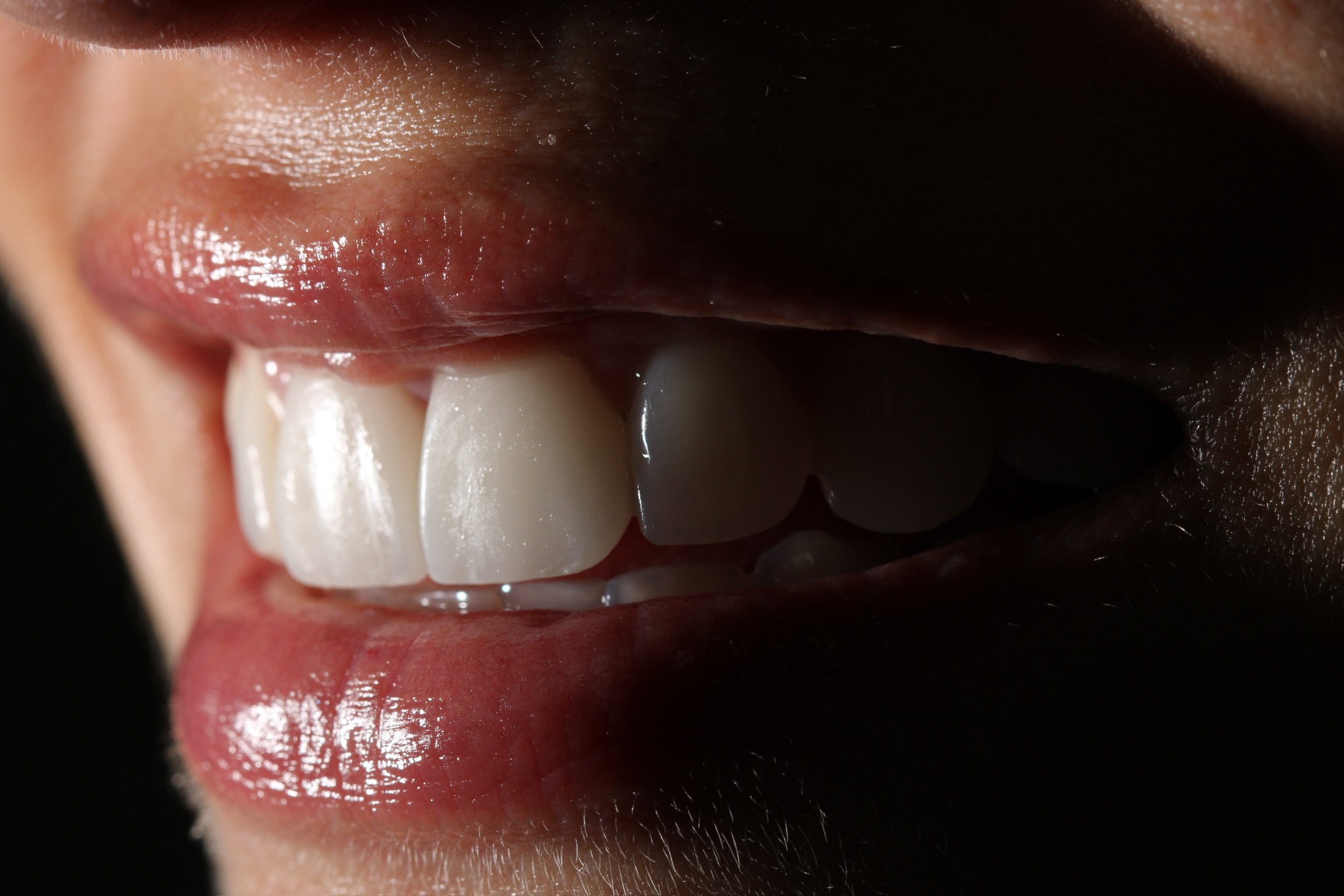
Ceramic veneers are thin, indirect restorations bonded to the facial surface of the tooth to correct issues with shape, color, or proportions.
When the characteristics of the case allow, they can be placed without any prior enamel reduction, which is known as no-prep micro-veneers.
However, when the patient's anatomy requires creating space for the restoration, a selective micro-preparationis performed, designed exclusively to remain within the enamel.
The importance of this philosophy lies not only in preserving healthy tissue—though that argument alone would be sufficient—but in the fact that adhesion to enamel offers significantly better performance than adhesion to dentin, which directly determines the long-term stability of the treatment.
Why enamel is the ideal surface for adhesion
Dental enamel is composed of approximately 96% hydroxyapatitewith very low organic content.
This composition allows acid etching to create a uniform microstructure upon which the resin cement establishes a highly resistant chemical and micromechanical bond.
Scientific evidence consistently demonstrates that this difference is a determining factor.
Peumans et al. concluded that having margins located entirely in enamel is the primary predictor of ceramic veneer survival.
Subsequently, Layton and Walton documented survival rates of over 95% after 15-20 years when bonding is performed exclusively on enamel.
In contrast, dentin contains a much higher proportion of water and collagen, making the adhesive interface more susceptible to hydrolytic degradation over time.
As a result:
- adhesive strength decreases;
- the risk of microleakage increases;
- the likelihood of debonding increases.
From a clinical perspective, every tenth of a millimeter of preserved enamel represents greater adhesion and increased treatment longevity.
Furthermore, Magne and Belser demonstrated that preserving enamel allows the tooth-restoration complex to maintain biomechanical behavior very similar to that of a natural tooth, distributing masticatory loads more efficiently.
How to determine if a patient is a candidate for no-prep veneers
The possibility of performing a no-prep treatment does not depend on the patient's wishes.
It is the result of an accurate diagnosis.
Within the GRAS® Methodthis decision is made using a Precision Testa provisional mock-up that allows for the final result to be reproduced before any tooth preparation.
This procedure allows us to verify:
- if the final volume will be adequate;
- if the resulting anatomy harmonizes with the smile and face;
- if the emergence profile respects the gingival tissues;
- if the restoration integrates correctly with the gums.
When all these parameters are favorable, no-prep treatment may be indicated.
If, on the other hand, the mock-up shows excessive volume or altered contours, the protocol determines that minimal enamel preparation is necessary.
This procedure eliminates subjective estimation and turns the clinical decision into an objective and verifiable process.
This approach aligns with the APT (Aesthetic Pre-evaluative Temporary) technique described by Gurel and colleagues, which uses diagnostic provisional restorations to define exactly where and how much to prepare, avoiding unnecessary tooth reduction.
When no-prep veneers can be placed
The no-prep technique is usually indicated for patients who present with:
- tooth wear due to erosion or abrasion, where it is only necessary to restore lost volume;
- diastemas or interdental spaces;
- peg-shaped or undersized teeth;
- moderate color alterations when the dental anatomy is already correct.
In all these cases, the restoration adds volume without creating over-contouring.
When minimal enamel preparation is necessary
There are situations where adding ceramic without prior tooth preparation would produce an unnatural or biologically unfavorable result.
These include:
- teeth with normal or increased volume;
- severe staining, such as intense fluorosis, tetracycline pigmentation, or color changes resulting from pulp necrosis;
- significant alterations in shape or position;
- patients with active bruxism who require a specific restorative protocol.
When preparation is necessary, the goal remains exactly the same:
to remove only the essential tissue and remain within the enamel whenever clinically possible.
This philosophy contrasts with conventional preparations for full crowns.
According to Edelhoff and Sorensen, a crown may require the removal of between 63% and 72% of healthy coronal structure, while a minimally invasive preparation for veneers is usually limited to approximately 3-30% of the tooth surface.
Care required to maintain ceramic veneers for years
The excellent survival rates described in scientific literature also depend on subsequent maintenance.
To promote the longevity of the treatment, it is recommended to:
- maintain rigorous oral hygiene by brushing with low-abrasive toothpaste and daily interdental cleaning;
- avoid using your teeth to open objects or bite into particularly hard items;
- attend regular check-ups to monitor bonding, periodontal health, and occlusal stability;
- use a night guard if you suffer from bruxism to protect your restorations from parafunctional forces.
The GRAS® Method philosophy
In theGRAS® Method, minimal preparation is not a response to a conservative trend or an aesthetic preference.
It is the logical consequence of applying the available scientific evidence on dental adhesion.
Every clinical decision pursues the same goal: preserving as much enamel as possible to achieve more predictable, stable, and long-lasting restorations, while always respecting the natural tooth structure.
Because in advanced restorative dentistry, preserving healthy tissue doesn't just mean being less invasive. It means building treatments capable of remaining stable for many years.
This article is for informational purposes only and does not constitute medical or
dental advice. It is not a substitute for an individualized clinical assessment by a
licensed dentist. Any decision regarding dental treatment must be made following an
examination and diagnosis by the dentist responsible for the case.
Dr. Cristina Gras practices advanced restorative dentistry in Barcelona (Paseo de la
Bonanova 110, Sarrià). More information at institutdentalcristinagras.com